How to Optimize Recipe Content for Google AI Overviews
There’s no secret sauce (pun intended) for getting your recipe content cited in Google’s AI Overviews and AI Mode.
As food bloggers and recipe content creators, you already have all the needed ingredients to get your brand surfaced and even mentioned across generative search platforms
These AIO ingredients are the decisions you made while developing the recipe, your observations and adjustments, and your firsthand knowledge and experience that went into getting each recipe right.
This isn’t new; Google has emphasized original experience and information that adds value beyond common knowledge in its guidance for generative AI search.
TL;DR – Optimizing Recipes for AIO
Start with a manageable group of posts where you developed the recipe, have testing notes, and have original media. Review the existing content before making any updates.
Use this process for each page:
- Confirm the page’s purpose and technical eligibility. Establish what the reader should accomplish and whether Google can access and use the content.
- Inventory the evidence. Collect development notes, process images, tested variations, reader questions, and relevant sources.
- Identify a specific deficiency. Name the missing instruction, unclear claim, unsupported recommendation, or unanswered question.
- Choose the smallest useful change. Clarify an existing step, surface a buried observation, combine repetitive sections, or add a supported answer.
- Check the complete recipe for consistency. Review the article, recipe card, captions, video, and structured data together.
- Record what changed and when. Keep enough detail to connect later observations with the work you performed.
Leave useful, accurate sections alone when the review does not reveal a problem.
AI tools can help organize your notes or flag unclear instructions. Review their output against your evidence, especially when they suggest substitutions, explanations, or experiences that were not in the source material.
The detailed recommendations below are an editorial approach to improving recipe content. They are not a citation formula, and no optimization guarantees inclusion in an AI Overview.
Confirm Google Can Access And Use The Page
Before updating a recipe, check its technical eligibility. A page must be indexed and eligible to appear in Google Search with a snippet to qualify as a supporting link in AI Overviews or AI Mode. Important information should be accessible in text, and Googlebot should be able to crawl the page. Google’s AI feature requirements
Also review the Search generative AI setting in Search Console. Google provides a control to include or exclude a site’s links and content from these features. Check the effective setting, including any choice inherited from a parent property. Search generative AI control
Keep your Recipe structured data accurate and consistent with the visible recipe. After an update, check ingredients, instructions, yield, and timing. Google’s Recipe documentation explains the supported markup and validation process. There is no special AIO schema you need to add. Google’s AI feature guidance
These checks establish whether the content is eligible. They do not tell you whether the recipe provides a useful answer to a particular question.
Keep The Recipe Focused On What The Reader Wants To Make
You’ve heard me say this many times over the years: make sure your content is focused on satisfying the reader’s primary intent… I’m here to learn how to make this recipe; your content should do just that.
If the user wanted different prep methods, or how to make this dish gluten-free, they would search for that.
Start by defining what someone should be able to accomplish with the page. For a recipe post, that usually means making the dish you promised, with a clear understanding of the ingredients, equipment, method, and expected result.
Basically, don’t add content that could dilute the post’s overall focus just to get it into the AIO.
For example, review whether your reader needs to know:
- Which pan you used and whether you tested another size.
- What the mixture should look like before baking.
- Which signs you use to judge doneness.
- Whether a requested ingredient substitution was tested.
- What changed when you stored, froze, or reheated the finished recipe.
Google’s AI features may use query fan-out, which means running related searches across subtopics while developing a response. That gives context for reviewing related questions, but it does not make every possible question necessary for your post. How Google’s AI features work

Use your recipe development notes and reader questions to identify useful additions. Include a question when its answer helps someone prepare, make, troubleshoot, or use this particular recipe.
Show What You Learned While Developing The Recipe
Review each post for information that could have come from your work in the kitchen.
A statement that a recipe is “tried and tested” leaves the reader with little understanding of what you tested or why the final version works for your intended result.
If you compared two ingredient amounts, explain what you changed and what you observed. If you tried another pan, document the pan and the result. If you rejected a variation, explain the problem that led you to leave it out.
You can also explain your preferences. Maybe you developed the recipe around a particular texture, a method you learned from a family member, or equipment your audience is likely to own.
Give readers enough context to understand that choice and decide whether it fits what they want to make.
Again, don’t create context drift; keep those observations tied to readers’ primary intent.
Google’s people-first content guidance asks whether a page demonstrates firsthand expertise and provides enough information to help readers achieve their goal. Your development notes are a practical place to look for that evidence.
Make The Useful Details Specific
When reviewing an existing post, look for instructions that require the reader to guess. Phrases such as “mix well,” “cook until done,” and “use your favorite substitute” deserve a closer look.
Use this review table to identify what needs clarification. Add only details supported by your testing or a credible source.
| Recipe detail | What to check in the post | Evidence to use |
|---|---|---|
| Expected result | Does the reader know the intended texture, appearance, and serving consistency? | Observations and photos of the finished recipe. |
| Ingredient choices | Have you explained a consequential choice or requirement? | Development notes, comparisons, or a reliable source for the ingredient’s function. |
| Substitutions | Does the post identify the replacement, amount, and effect on the result? | A documented test or clearly attributed external evidence. |
| Equipment | Are relevant sizes, materials, and settings specified? | Equipment details recorded during testing. |
| Timing and doneness | Is the timing connected to the conditions and observable completion cues? | Recorded timing, equipment, and observations from the method used. |
| Troubleshooting | Can the reader recognize the problem and understand the recommended response? | Observed failures, follow-up tests, or qualified explanations. |
| Storage and reheating | Does the advice distinguish handling instructions from changes in quality? | Your observations of texture and flavor, plus authoritative support for safety claims. |
This is a review tool, not a requirement to add seven sections to every recipe. Some posts already explain these details well. Others may need one clarification in an existing step.
Explain Substitutions, Exceptions, And Failures Honestly
A substitution recommendation needs enough detail to be usable. Review what you changed, how much you used, whether the method needed adjustment, and how the finished recipe compared with the original.
If you have not tested a substitution, say so. You can acknowledge the question without promising a result. When you rely on another source, identify that source and check whether its advice applies to your recipe and method.
Apply the same care to troubleshooting. A reader reporting a sunken loaf gives you a problem to investigate. That comment alone does not establish the cause. Separate the symptom, possible explanations, and anything you have verified through follow-up testing.
Put qualifications beside the advice they limit. If a recommendation only applies to the pan, ingredient, or preparation method you tested, make that clear where the reader encounters it.
For food safety claims, use current authoritative guidance and link it beside the relevant instruction. Your observations about texture or flavor should be separate from safety recommendations.
Get Your Blog Cited In Google’s AI Answers
Our AIO Optimizer Audit identifies the exact posts on your blog that are ranking but not appearing in Google’s AI answers. We analyze who’s getting credit instead, what they’re doing differently, and deliver small changes you need to make to close the gap. No rewrites. No new content.
Request a free AIO assessment of your content to see if the AIO Optimizer Audit is right for you.
Organize The Information Around The Cooking Process
Make the opening useful. Describe the dish, the result readers can expect, and any important condition they should understand before starting. Include personal context when it explains your approach or adds something meaningful to the recipe.
Use headings that help someone locate the information they need. Use “Substitutions I tested” and “How to tell when the center is done” as headings when the content supports them. The wording should accurately describe what the section delivers.
When a heading asks a question, answer it directly, then explain the conditions, reasoning, and evidence. Keep critical instructions in the recipe card. Someone using the printable recipe should have the information needed to follow the method successfully.
Google does not require a special AI writing style, tiny content chunks, or an ideal page length. Treat direct answers and descriptive headings as practices that help readers navigate your content. Google’s guidance on AI optimization myths
Use a comparison table when you have actual alternatives to compare under consistent conditions. Use an FAQ when there are useful unanswered questions. Avoid repeating the same advice across the introduction, tips, substitutions, and FAQ sections.
Use Original Photos And Video To Explain The Difficult Parts
Choose process images around the moments when a reader needs to judge what is happening. Review whether your photos show the relevant texture, thickness, color, or stage of preparation clearly enough to guide someone following the recipe.
A video can demonstrate a motion or changing consistency. A comparison photo can show the results of two variations you tested. Label the conditions so readers understand what changed between them.
Keep essential instructions, quantities, and qualifications in the text. Google recommends making important content available in textual form and supporting it with useful images and video. Google’s content accessibility guidance
Give readers the answer on the page and use the media to help them apply it. A useful visual should contribute more than another view of the finished dish.
Build Supporting Content When A Topic Needs More Room
Keep recipe-specific advice with the recipe. Consider a separate supporting article when a question requires a broader explanation, a different process, or evidence that would overwhelm the main post.
For example, instructions for the butter consistency used in one cookie recipe can stay with that recipe. A comparison of several butter-softening methods could justify its own article if you conduct the comparison and explain the conditions and results.
Link to that supporting article where the reader encounters the relevant step or decision. Keep any instruction essential to making the recipe on the recipe page itself.
Google warns against producing separate content for every search variation to manipulate visibility. Use the reader’s needs and the depth of the subject to decide when another page is warranted. Google’s guidance on topic coverage
Measure visibility alongside traffic and reader behavior
Establish a baseline before making changes. Record the queries you are checking, whether they trigger an AI Overview, which pages are cited, and the date and search conditions. Review whether a citation supports the associated statement and whether it draws on the original information in the page.
Google’s Search Generative AI performance reports provide impressions and page-level visibility, with country, device, and date breakdowns as documented. Google updated its launch announcement to state that the reports rolled out worldwide on August 31, 2026. Google’s performance report announcement
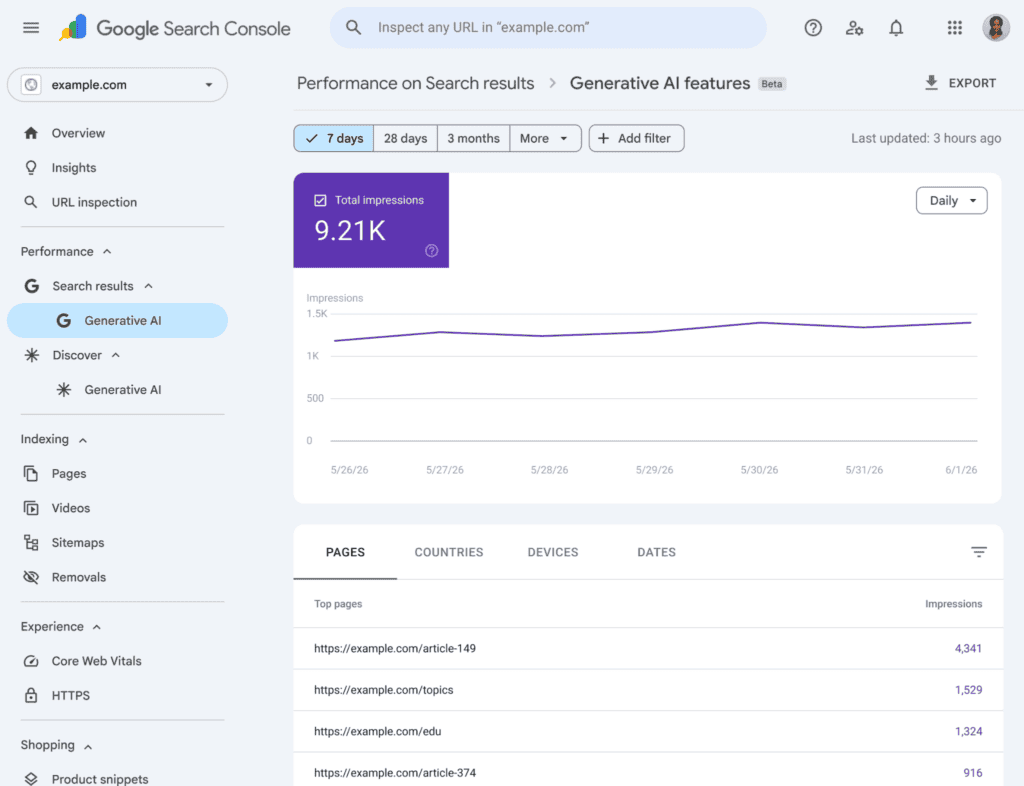
Review that visibility alongside Search Console clicks, impressions, click-through rate, and positions, plus landing-page traffic and engagement in your analytics. Keep the reporting scopes clear. Overall organic traffic changes should not automatically be attributed to AI Overview activity.
Repeat citation checks because responses and source selections can vary. Where practical, compare the updated recipes with a similar group left unchanged, and account for seasonality and other site changes. A citation appearing once after an edit is an observation to track, not proof that the edit caused it.
For a food blog supported by page views, use those measurements to understand whether greater visibility is accompanied by visits and useful reader activity. Keep prioritizing improvements you can substantiate: clearer instructions, a tested alternative, or an explanation that helps someone successfully make your recipe.

Arsen R
Founder and Managing PartnerFounder @ TopHatRank, Digital Marketer, SEO, International Speaker, SEO Coach
Read more about Arsen